

It has been an offseason of firsts in my career. Starting with being on staff where a coaching change has been made via administration and having the opportunity to interview for a head coaching role at the collegiate level – no, not at the same institution. My objective since suit & tying on the sidelines has been to capture a head coaching role at the Division III level; this offseason presented the first crack at consideration.
If you are reading into this correctly, I didn’t get the gig but it is a step in the right direction. As they say, losses are learning experience so let’s break down what went right and what went wrong to prepare for the next opportunity.
Getting A Foot In The Door
Timing and a previous connection certainly played a role. For others applying blindly, my guess is a change in administration opens the job up to the best possible candidate with and without previous connection, or regional brand recognition can earn a seat at the table.
In my case, I had familiarity with the Athletic Director and some other staff members within the Athletic Office. So a phone call transpired opening an invitation to schedule a future meeting with the search committee. Here’s how it unfolded:
- Introduction & Interest In The Job
- Detail What To Expect (Search Committee, Interview Style, & Initial Timeline)
- Asked If I Had Any Questions
I was just pumped to receive the call and express my interest in the opportunity, consequently my mind wasn’t prepared to come up with many questions – this was possibly my first mistake.
What I did come up with may still have been beneficial to ask, maybe not, let me know what you think.
- Is there a particular point of emphasis from the administration in search of the next head coach? Qualified with referencing enrollment, wins/losses, academics, etc.
- What is the envisioned pay scale for the opportunity?
There was roughly a week prior to the interview which provided enough time to personalize the coaching portfolio to share with the search committee.
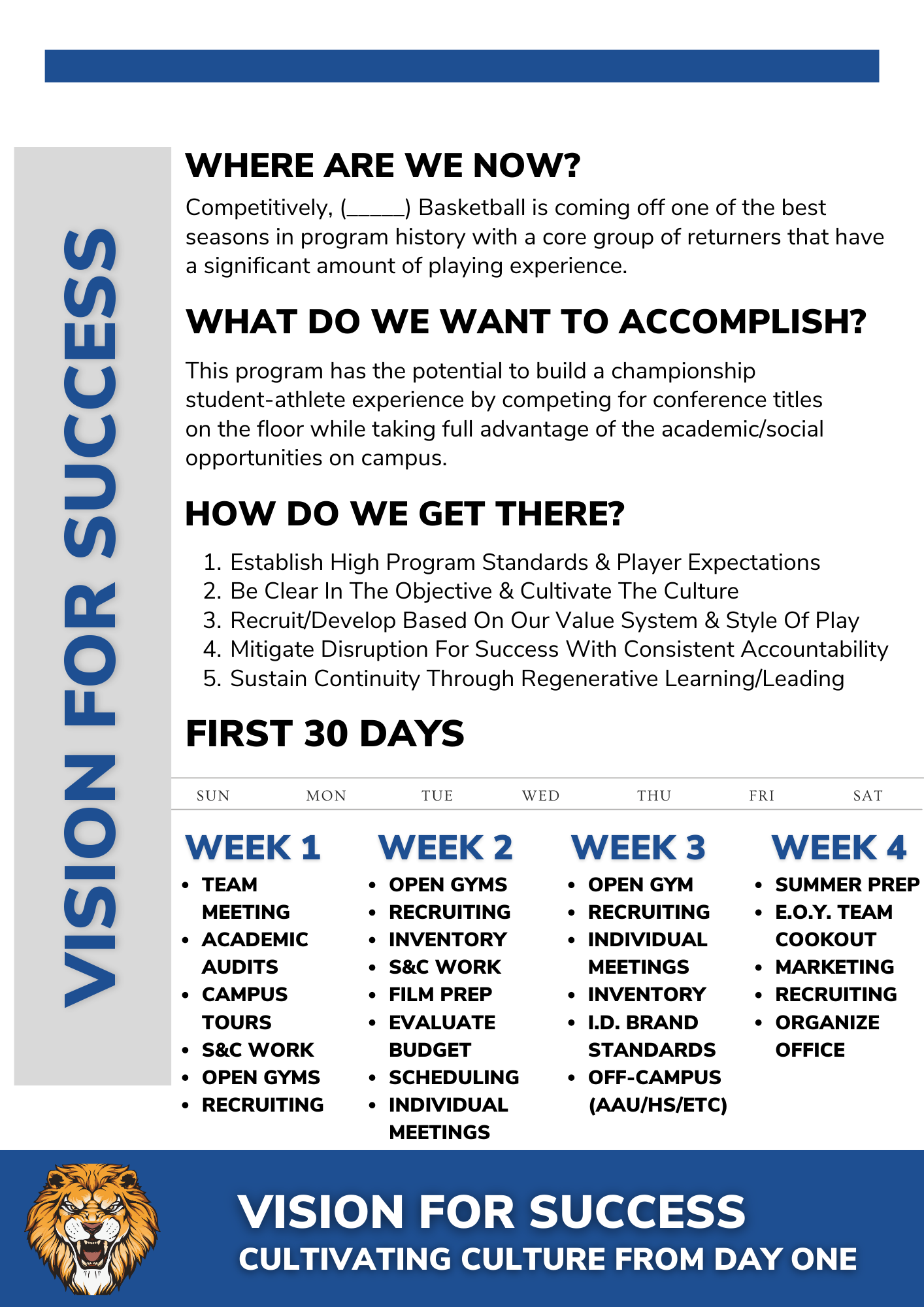
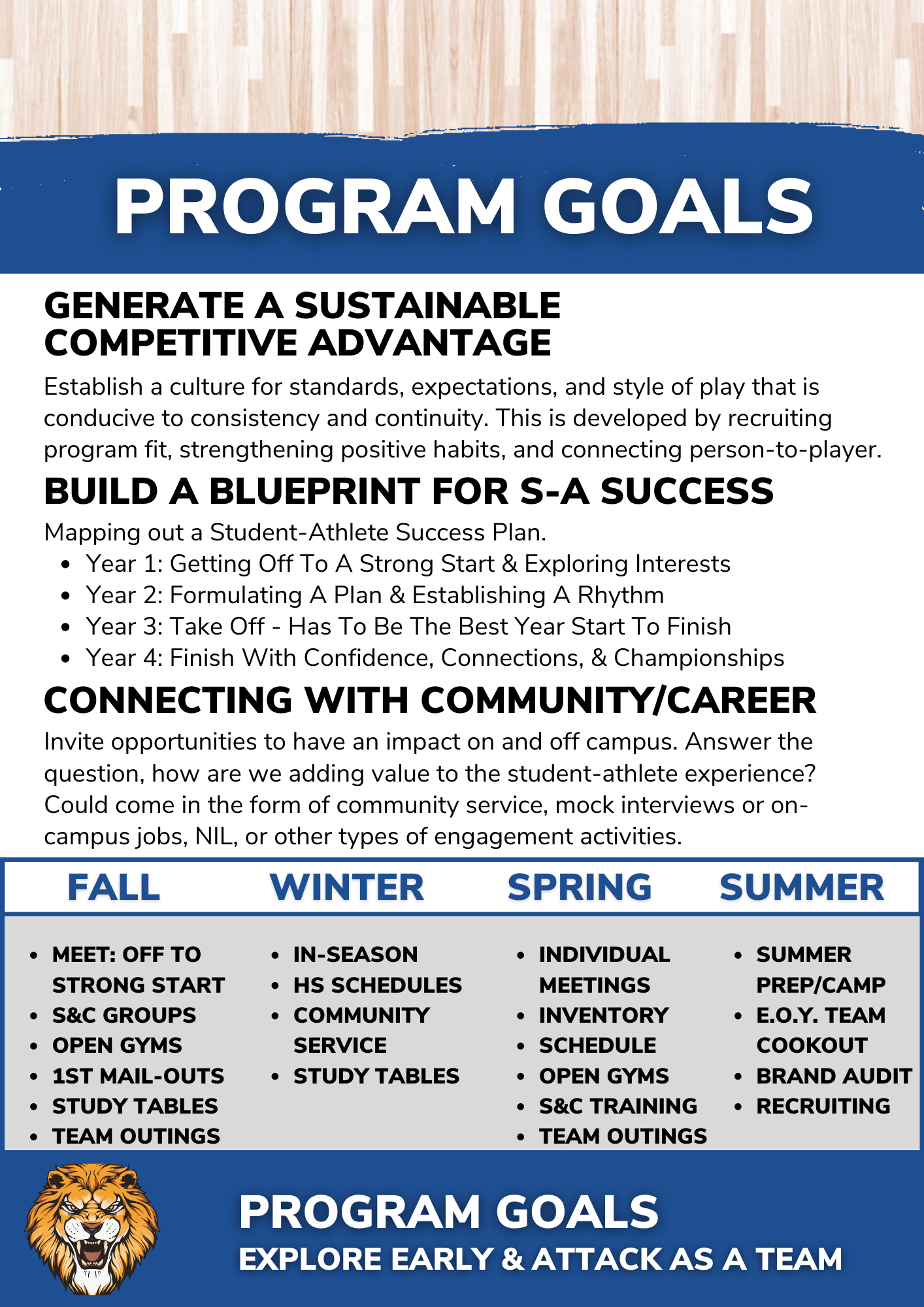

This is something I should’ve referenced more throughout our discussion.
During The Interview Process
My mentality for better or worse was to flip the interview to be about gauging my interest in the institution versus their interest in my candidacy. This was simply an attempted mind-trick to mitigate the amount of pressure going into interviewing for my first head job. I want to be a head coach at this level, but I also want to ensure that my profile is the right fit and I’m doing my due diligence to discuss the sustainability of the opportunity.
All things considered I felt pretty calm and collected throughout the entire meeting, this has not been the case in every other interview setting. It helped to see familiar faces on the call and the introduction of how everything would transpire set a comfortable tone.
Some Of the Questions Asked:
- What have I learned from all the different places that I’ve been?
- How can/do I relate to the kids in the locker room being from different backgrounds?
- How would I work with the admissions counselors to create the best recruiting experience?
- Describe my recruiting approach for the program moving forward.
- What are some of the first things I would look to do after being hired?
- Basketball is one of the few ticketed sporting events on campus. How would I garner interest or cultivate support towards our program, campus, and community?
- Put it all together, what makes you the best fit for this program moving forward?
There’s a common assertation that if an interview is more conversation instead of call and response then things are headed in a positive direction. Mine fell somewhere in between. Maybe that was an early sign.
My responses were thorough, however after receiving some feedback, it wasn’t condensed enough; which I felt was fair. This is a challenge of mine on a consistent basis: coach in bytes. Supply small strings of information, instead of overloading. Overtalking can blur the message, bore the audience, or discourage follow ups.
The other issue was not using the damn resources provided to illuminate the message. Coaches spend all this time preparing portfolios filled with visuals, templates, and expected order of operations; my failure was not letting my actual work do the talking. The big knock for sure was not being clear on my first 30-60 days. Lifeblood of college athletics is recruiting, and my response of first days on campus were about connecting with the inherited roster without enough details related to securing commitments for the next class.
Receiving The Rejection Call & Reflecting On The Experience Moving Forward
Based on the amount of time that took place between interview and the rejection phone call, it felt pretty expected when the AD’s contact information lit up my screen a week later.
Everyone involved in this process was first-class, and I knew that going into it; which is why I applied for the opportunity in the first place. So the call itself was expectedly cordial, “Heading in a different direction, but thank you(s).”
Ask for feedback. Don’t get personal about other candidates, but specific to your interaction and the incongruity with the search committee’s expectations. Worst case scenario they’ll say they can’t go into details; which leaves you in the same situation anyways – wihout the job.
It was my first opportunity, and hopefully not my last provided that I learn from my losses.
Key Takeaways:
- After Applying, Mentally Prepare For A Phone Call
- If Possible, Figure Out the Administration’s Agenda (Easier Said Than Done)
- Cater The Coaching Portfolio Specific To The School – Then Use It!
- Communicate In Byte Size – Get To The Point
- Win The First Quarter: Recruiting, Organization, & Direction

 Coach's Climb