

Coaching Is Sales, Whether You Like It Or Not
During Pandemic times, I wrote a Letter Of Recommendation for all coaches that decided to professionally pivot out of the game to explore a different line of work. There is an immeasurable list of transferable qualifications that shape basketball coaches into highly marketable prospective employees for other industries. And whether we care to admit it, one of those entrepreneurial traits of coaching is in the form of sales – all the time!
“Ultimately, every business is accountable for meeting the needs of the customer.” (167)
The customer is queen or king, or from a coaching perspective, players are the priority. From garnering interest to shaping a value proposition for student-athletes to buy-in to program initiatives; every coach is selling an opportunity to invest in future success.
“The likelihood of closing a sale is directly linked to the preparation that goes into making that sale.” (179)
Asking The Right Questions
Lack of execution is often a derivative of miscommunication. This can be the separation between effectively reaching a kid and untapping future potential or widening the gap between player vs. coach expectations.
Kevin D. Johnson references a book, Questions That Sell quoting:
“Research has shown that during typical business interactions customers reveal only 20 percent of what is on their minds. . . It is your responsibility to get to the other 80 percent.” (183)
How many times are coaches habitually asking the question, does that make sense or do you understand? And players oblige with a head nod or yes to deflect any more attention. This is a guilty habit of mine and the author does a good job offering a few suggestions to extract more from customers.
- In general, a bad question doesn’t encourage a substantive answer
- Avoid close-ended questions
- Overcome an objection with by directly addressing apprehensions
- Right questions reveal reasoning
Two Thoughts On Leadership: Sacrifice & Endurance
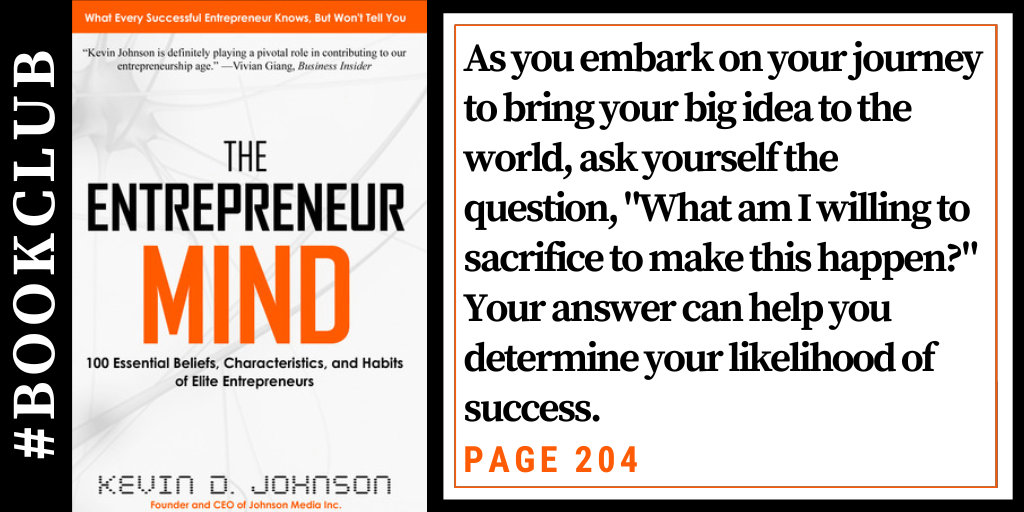
No matter who the subject is when considering effective leadership, sacrifice has to be at the top of the list for identifiable characteristics. Players, coaches, and programs that show sustainable success differentiate themselves from their competition by exhibiting sacrifice.
The author finishes off the topic of leadership by comparing entrepreneurial success to running a marathon.
“More than any other characteristic of an entrepreneur, having superhuman endurance is by far the most vital. It’s even more important than being smart, well-funded, or charismatic.” (207)
Leaders have to play the long game, particularly with EQ management, team over individual perspective, and understanding the value of compound interest. The quote above is similar to one of my favorites from former President Calvin Coolidge. Take from either, but the message remains the same: power comes from persistence.


 Coach's Climb
Leave a comment